What does it take to build Agentic AI Workflows?

In my last post, I shared why enterprises need autonomous, agentic workflow–ready data. But knowing why is only half the story. The next question is: what does it actually take to build agentic AI workflows in the enterprise?

The answer starts with business ROI, but it only succeeds if underpinned by the right technology foundation. Let’s understand this journey.

1. Start with Business ROI: Use Cases That Matter

The promise of agentic AI is not abstract; it’s about hard ROI measured in hours saved, costs reduced, compliance improved, and revenue accelerated. Enterprises that embed AI-driven agents into their workflows are already reporting significant returns.

For example:

  • Operational Efficiency & Automation Omega Healthcare implemented AI-driven document processing to handle medical billing and insurance claims at scale. The results: 15,000 hours saved per month, 40% reduction in documentation time, 50% faster turnaround, and an estimated 30% ROI. 👉 Read more
  • Labor Reduction & Productivity Gains In accounts payable, agentic automation is now capable of managing up to 95% of AP workflows—covering exception resolution, PO matching, fraud detection, and payments—dramatically reducing manual overhead. 👉 See details
  • Topline Revenue Growth & Cash Flow Optimization A mid-sized manufacturer deploying AI invoice automation cut manual effort by 60% and reduced invoice approval cycles from 10 days to just 3 days. This improved supplier satisfaction while accelerating cash flow—a direct driver of topline agility. 👉 Learn more
  • Trust & Compliance A South Korean enterprise combined generative AI with intelligent document processing for expense reports, cutting processing time by over 80%, reducing errors, and improving audit compliance—while the system continuously learned from user feedback. 👉 Case study

The business ROI is clear. But ROI only materializes if the technology foundation is strong.

2. The Technology Foundation for Agentic AI

Agentic AI requires more than just a clever model. It needs a robust stack that ensures agents act on data that is accurate, fresh, and explainable. Without this, automation becomes brittle, outputs are untrustworthy, and scaling to new use cases is nearly impossible.

As a founder, I can’t help but see the parallel to building a company. Every wise founder, investor, or YC advisor repeats the same lesson: scaling before product–market fit is risky. You can grow fast in the short term, but without nailing the fundamentals, you eventually hit a wall.

The same is true for AI: scaling before nailing is risky. And here, what needs to be nailed is data infrastructure and AI infrastructure.

You can launch impressive AI pilots, but without reliable data and context, failures show up quickly—hallucinations, inconsistent outputs, compliance gaps.

By investing first in the foundation—valid, explainable, governed data pipelines—you enable AI to scale safely and accelerate into new use cases with confidence.

The foundation determines how fast and how far you can grow.

At the heart of this foundation is the Lakehouse architecture. Why? Because agentic workflows rely on low-latency access to both structured and unstructured data, and the Lakehouse unifies both in open formats like Iceberg, Delta, and Hudi.On top of this foundation, enterprises layer:

  • Purpose-built query engines (Trino, Spark, proprietary engines) that allow federated access to diverse sources.
  • A context layer: governance, lineage, semantics, and—critically—data quality signals.

Just as startups succeed by nailing the core before scaling, AI succeeds by nailing its data and infrastructure foundation before attempting ambitious, agentic workflows.

3. The Three Pillars of Agentic AI Technology

When you strip it down, the technology requirements for agentic AI come down to three pillars: Data, Models, Queries, and Context.

image
Trusted data + lakehouse architecture + context signals = the foundation for agentic AI.

Data

Data is not just about landing rows in a table—it spans the entire lifecycle:

  • Storage in scalable, cost-effective object stores (S3, ADLS, GCS).
  • Transfer across batch or streaming pipelines.
  • Access & Discovery through catalogs and metadata systems.
  • Querying for analytics, training, or real-time decisioning.
  • Validation for freshness, completeness, conformity, and anomalies.
  • Modeling (if needed) into marts or cubes, historically required for every new use case.

This is why the Lakehouse and open formats (Iceberg, Delta, Hudi) fundamentally change the game. In the old world, every new consumer meant another round of transfer → transform → model → consume—bespoke, brittle, and expensive.

With open formats:

  • You dump/land once in the Lakehouse.
  • You consume many times, across engines (SQL, ML, vector search) and contexts (BI dashboard, LLM, agent).
  • You preserve lineage and metadata so every consumer knows not just what the data is, but how trustworthy it is.

This enables zero-copy, zero-ETL architectures—where data is queried in place, and pipelines are replaced by shared, governed access.

Models & Queries

Now that the Lakehouse addresses storage, movement, and transformation, responsibility shifts upward. The old world of pre-building marts and semantic models is giving way to runtime query and modeling.

  • Agents, SQL, and ML/LLMs can dynamically model, filter, and query data at runtime.
  • Runtime query engines (Trino, Spark, Fabric, Databricks SQL) enable federated, ad hoc queries across massive datasets.
  • AI models themselves (LLMs and SMLs) can consume embeddings, metadata, and joins directly to answer questions or trigger actions.
  • Analytical engines like PuppyGraph make complex graph queries over Iceberg tables feasible—without needing a separate graph database.

In short, the Lakehouse stabilizes the base, while agents and models provide runtime intelligence on top.

Context

If Data is the fuel and Models are the engine, Context is the navigation system. It ensures agents don’t just move fast, but move in the right direction.

  • Provided Context: prompts, system instructions, agent-to-agent communication.
  • Derived Context: metadata from lineage, governance, and semantics.
  • Critical Context: runtime reliability signals (freshness, completeness, anomalies).

And this is essential because agents are, by definition, autonomous. With great power comes great responsibility—an agent empowered to act without context can cause more harm than good.

That’s why Telmai focuses here: enriching every dataset with reliability metadata. Agents don’t just know what to do—they know whether it’s safe to act.

4. Industry Alignment: The Lakehouse + Context Story

As enterprises adopt agentic AI, industry leaders are converging on a common foundation: Lakehouse architectures, open query engines, and context-rich catalogs. The direction is clear—data must be unified, governed, and contextualized before agents can act reliably.

  • Microsoft (Fabric, OneLake & Purview): Unified storage and governance. Next Horizon → real-time trust signals for Copilot and Data Agents.
  • Databricks (Delta + Unity Catalog): Open formats and metadata governance. Next Horizon → continuous reliability context for “Agentic BI.”
  • Snowflake (Horizon): Governance and discovery. Next Horizon → runtime reliability metadata.
  • GCP (Dataplex): Metadata-first governance. Next Horizon → embedded reliability checks across streaming.
  • Atlan & Actian + Zeenea: Metadata lakehouse and hybrid catalog tools. Next Horizon → dynamic catalogs enriched with live trust signals.

Across all these ecosystems, the trajectory is clear: governance and semantics are rapidly maturing. The next horizon is weaving in a real-time reliability context.

5. Closing: Building Agentic Workflows on Trusted Data

The lesson is simple:

  • The use cases (automation, efficiency, revenue growth, compliance) are compelling.
  • The foundation (Lakehouse + engines/models + context) is non-negotiable.
  • The pillars (Data, Models, Context) define the architecture.
  • And the Next Horizon is context – especially derived reliability metadata that tells agents whether data is fit for use.

At Telmai, our product path is aligned with this future:

  • MCP server to deliver AI-ready, validated data where agents operate.
  • Support for unstructured data and NLP workflows, so agents can reason across PDFs, logs, and chat.
  • Write–Audit–Publish + DQ binning to automate real-time quarantine of suspicious records.

This is how enterprises will scale agentic AI safely—by building on trusted, validated, context-rich data.

Because in the agentic world, it’s not enough for AI to be smart. It has to be confident.

Want to learn how Telmai can accelerate your AI initiatives with reliable and trusted data? Click here to connect with our team for a personalized demo.

Want to stay ahead on best practices and product insights? Click here to subscribe to our newsletter for expert guidance on building reliable, AI-ready data pipelines.
Driving Reliable Graph Analytics on your Open Lakehouse Data with Telmai and PuppyGraph

As enterprise data ecosystems expand, data pipelines have become increasingly distributed and heterogeneous. Critical business information streams in from numerous sources, landing in diverse cloud systems such as data warehouses and lakehouses. With the rapid adoption of open table formats like Apache Iceberg and Delta Lake, extracting meaningful context from this complex data landscape has grown more challenging than ever.

Graph databases are emerging as a vital tool for enterprises aiming to surface nuanced insights hidden within vast, interconnected datasets. Yet, the reliability of any graph model hinges on the quality of its underlying data. Without clean, trusted data, even the most advanced graph engines can produce misleading insights.

This article examines why graph modeling on open lakehouses demands a heightened focus on data quality and how the combined strengths of Telmai and PuppyGraph deliver a robust, transparent, and scalable solution to ensure your knowledge graphs stand on a foundation of clean, reliable data.

What is a Graph Database?

A graph database models data as nodes and edges rather than rows and tables. This structure makes it ideal for querying complex relationships that include customer behavior, fraud detection, supply chain optimization, or even social behavior graphs.

Graph databases use nodes (representing entities) and edges (representing their relationships) to reflect real-world connections naturally. This model is especially powerful for answering questions like:

  • How are customers, products, and transactions interrelated?
  • Which suppliers, shipments, or touchpoints form a risk-prone chain?
  • What are the shortest paths or networks among organizational entities?

There are two main types of graph databases:

  • RDF (Resource Description Framework): Schema-driven, commonly used for semantic web applications.
  • Property graphs: More flexible, allowing arbitrary attributes on both nodes and edges, making them intuitive for a wide range of use cases.


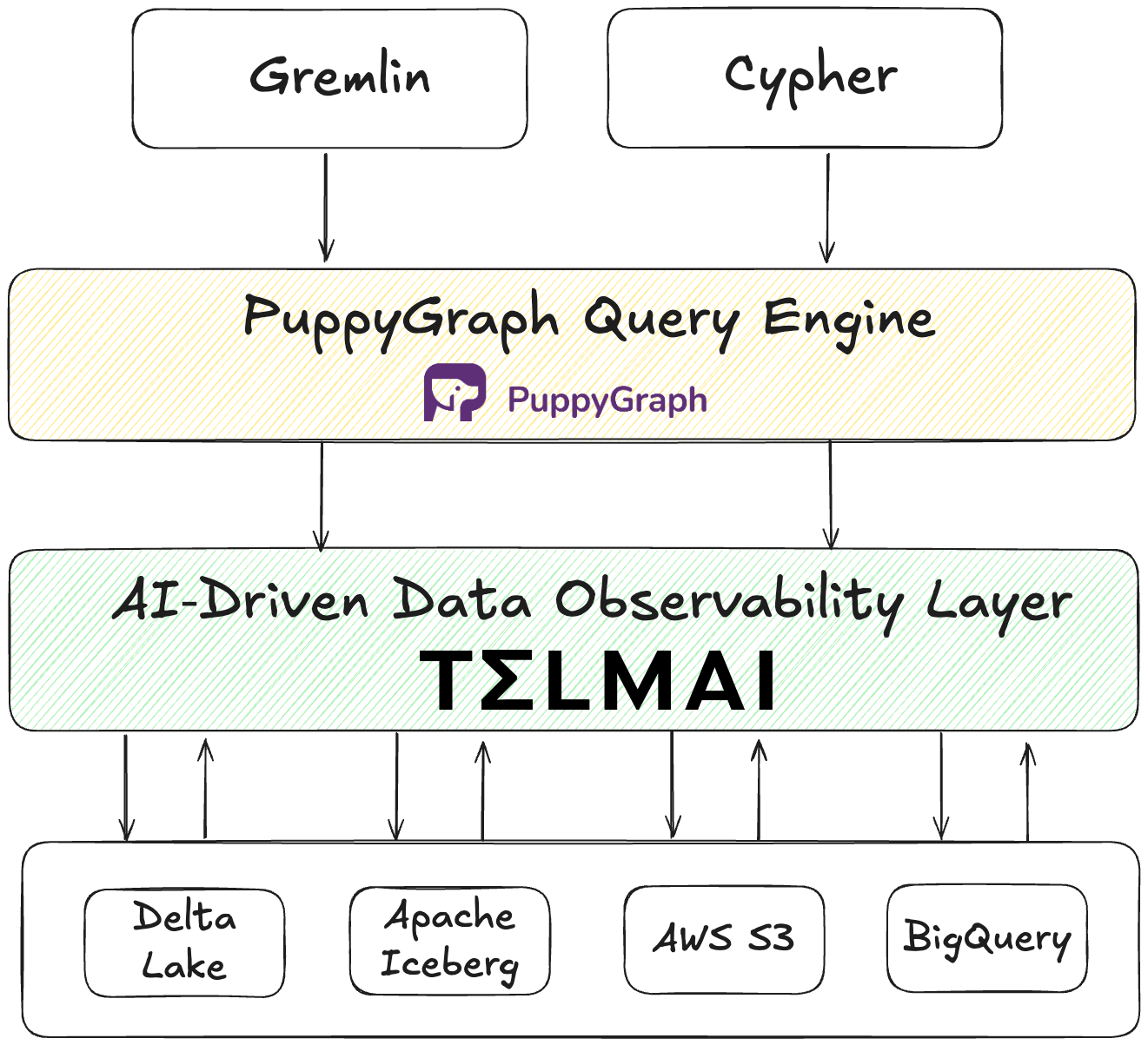
PuppyGraph is a high-performance property graph engine that lets you query structured data as a graph, making it easy to uncover relationships and patterns without moving your data into a separate graph database.  It supports Gremlin and Cypher query languages, integrates directly with tabular data sources like Iceberg, and avoids the heavyweight infrastructure typical of traditional graph databases. 

Graph Power Without Data Migration

Historically, running advanced analytics meant extracting data from storage and loading it into tightly coupled, often proprietary platforms. This process was slow, risky, and led to fragmentation and vendor lock-in. 

Modern compute engines like PuppyGraph break this pattern by enabling direct, in-place graph querying over data in object storage. This creates a centralized source of truth while maintaining architectural flexibility, reducing complexity, and preserving data integrity, future-proofing your analytics stack.

Why Data Quality Must Be Built Into Your Graph Pipeline

Modern lakehouses built on open table formats like Apache Iceberg or Delta Lake promise agility, scale, and interoperability for enterprise data. However, their very openness can mask a new breed of data quality issues that quietly erode the value of downstream analytics, especially in graph modeling.

Key data quality issues common in open table formats and distributed pipelines that could affect graph modeling include:

  • Schema drift and type inconsistencies: Data evolving over time may introduce mixed data types or missing columns, breaking parsing logic and causing graph construction failures or unexpected node/edge omissions.
  • Null or missing foreign keys: Missing references between tables can create orphaned nodes or broken edges, fragmenting the graph and skewing relationship metrics.
  • Inconsistent or mixed timestamp formats: Time-based event relationships rely on accurate event sequencing. Mixed formats disrupt these sequences, making time-based graph queries unreliable.
  • Out-of-range or anomalous values: Erroneous measurements or outliers can bias graph algorithms, for example by inflating edge weights or misrepresenting geospatial relationships.
  • Duplicate or partial records: These create redundancy and fragmentation, inflating graph size and complicating pattern detection.
  • Referential mismatches across distributed datasets: Inaccurate joins lead to false or missing relationships, diluting the reliability of graph analytics.

The distributed and heterogeneous nature of lakehouse pipelines amplifies these challenges, as data flows through multiple ingestion points and transformations before reaching the graph layer. Without systematic, automated data quality validation before graph modeling, these hidden errors remain undetected—leading to delayed insights, costly rework, and even production outages.

Embedding rigorous data quality checks early in the pipeline ensures that your graph analytics start from a clean, consistent, and trusted foundation. This is where the combined strengths of Telmai and PuppyGraph offer a breakthrough. 

How Telmai and PuppyGraph Transform Raw Data into Trusted Graph Analytics

Enterprise analytics delivers true value only when the data relationships it relies on are accurate and transparent. Telmai and PuppyGraph offer an integrated solution that validates and models data in real time ensuring every data node, edge, and relationship is trustworthy. This unified approach enables teams to interpret complex datasets with clarity and agility.

Figure: Telmai & PuppyGraph Architecture

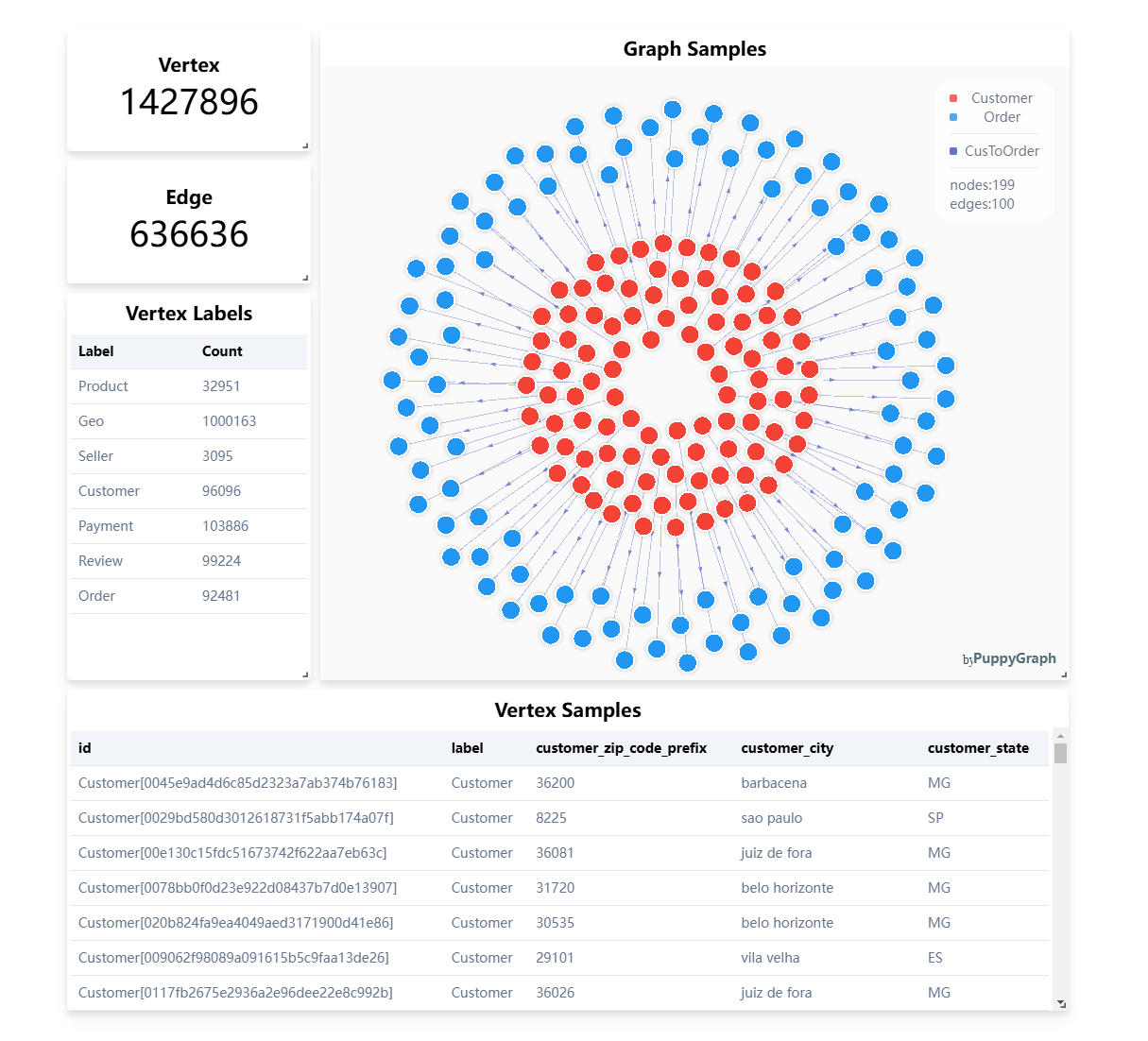
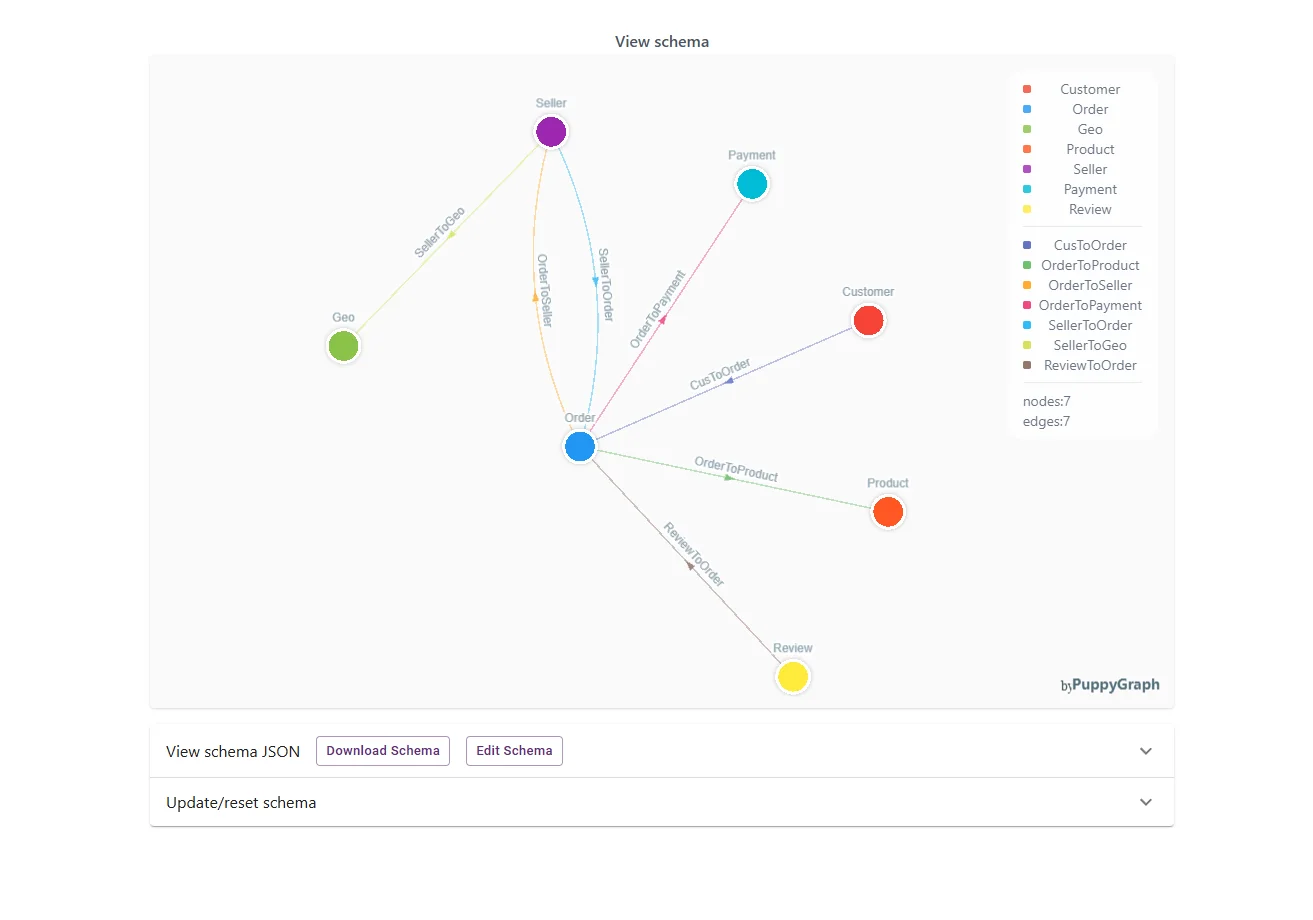
To bring the joint value of Telmai and PuppyGraph into sharp focus, let’s walk through a practical example using the Olist dataset — a publicly available e-commerce dataset rich with customer, order, product, and seller information.

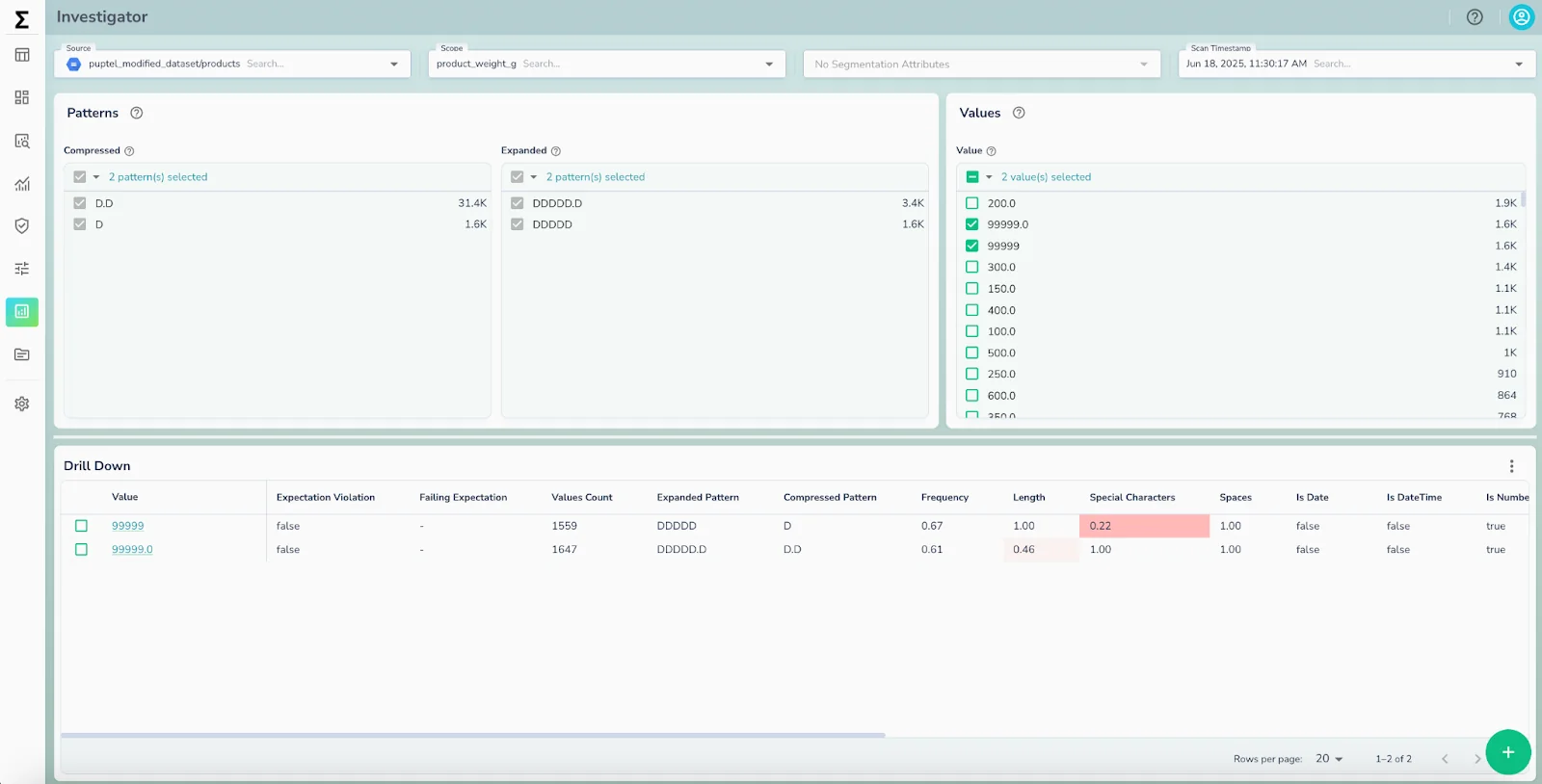
In this dataset, we injected common data quality challenges such as:

  • Null foreign keys (e.g., missing customer_id or seller_id), which break the critical links between customers, orders, and products
  • Inconsistent timestamp formats : Mixing formats such as MM/DD/YYYY with ISO 8601 timestamps leads to unreliable temporal relationships. For graph analytics that rely on event sequencing, like tracking purchase funnels or supply chain timelines, this inconsistency results in erroneous ordering of events, skewed path analyses, and misleading temporal insights.
  • Out-of-range values, like unrealistic product weights that skew relationship weighting and analytics
  • Data type mismatches that lead to processing errors or dropped nodes during graph construction

If these issues remain undetected and uncorrected, the resulting graph will have broken edges, orphan nodes, and inaccurate relationship metrics,ultimately producing misleading insights and undermining trust in your analytics.

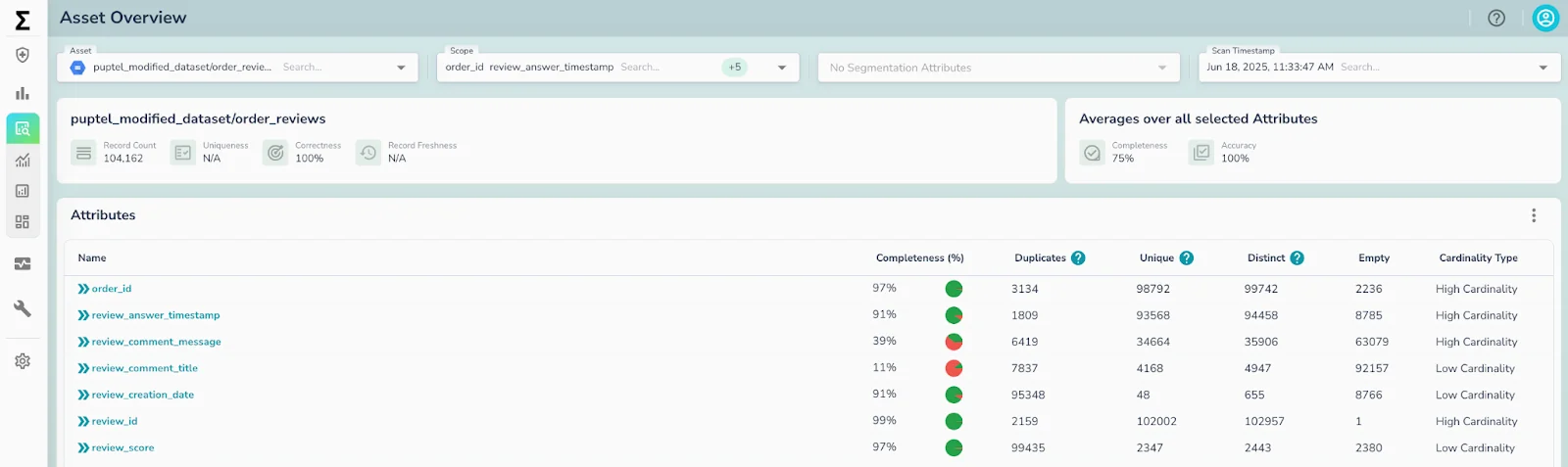
This is where Telmai plays a pivotal role. Before the data ever reaches the graph engine, Telmai performs comprehensive, full-fidelity data profiling and validation directly on the raw Iceberg tables in their native cloud storage location.

It automatically detects null keys, inconsistent formats, schema drift, and anomalous values, without resorting to sampling that might miss critical errors. Telmai surfaces these issues early, enabling data teams to correct or flag problematic data before graph modeling begins.

With this validated, clean data in place, PuppyGraph ingests the Iceberg datasets natively—eliminating the need for costly data migrations or fragile ETL processes. PuppyGraph then constructs accurate, high-performance property graphs that faithfully represent the true entity relationships and temporal sequences within your data.

Graph algorithms depend heavily on the correctness of edges and nodes to surface meaningful relationships, identify patterns, and detect anomalies. By integrating Telmai’s rigorous data quality validation with PuppyGraph’s flexible, in-place graph computation, organizations gain confidence that their knowledge graphs are built on solid ground. This ensures faster onboarding, fewer silent errors, and graph analytics that reliably power critical business applications—from customer journey analysis to fraud detection and supply chain optimization.

The old adage “garbage in, garbage out” holds especially true here: graphs built on noisy or inconsistent data risk misleading conclusions, operational disruptions, and lost business opportunities.

Conclusion

Together, Telmai and PuppyGraph offer a seamless, scalable solution that enables enterprises to build trustworthy knowledge graphs on top of open lakehouses. By integrating rigorous data validation with high-performance graph modeling, here are the key benefits that this joint solution can offer:

  • Faster onboarding: Validated data minimizes back-and-forth between data engineers and graph modelers, speeding up time to value.
  • Fewer silent errors: Early detection prevents costly rework and avoids customer-facing problems caused by inaccurate graph outputs.
  • Smarter data products: Reliable, high-quality graphs enable more precise personalization, recommendations, and fraud detection—driving better business outcomes.

Ready to build trusted, scalable graphs? Click here to talk to our team and learn how to turn your lakehouse into a source of clean, reliable insights.

Want to stay ahead on best practices and product insights? Click here to subscribe to our newsletter for expert guidance on building reliable, AI-ready data pipelines.
Embedding AI-Ready Observability in the Lakehouse: Lessons from Bill and ZoomInfo

As enterprises modernize toward AI-first architectures, trustworthy data pipelines have become a foundational requirement. At enterprise scale, the sheer velocity, variety, and complexity of evolving data ecosystems make it essential not just to deliver clean data, but to embed data observability deeply within lakehouse architectures. Without it, even the most sophisticated analytics or AI initiatives risk breaking under the weight of unreliable inputs.

At this year’s CDOIQ Symposium, Hasmik Sarkezians, SVP of Data Engineering at ZoomInfo, and Aindra Misra, Director of Product at Bill, joined Mona Rakibe, CEO of Telmai, for a candid panel discussion. Together, they shared hard-won insights on what it takes to operationalize real-time, proactive data observability in modern lakehouse environments—and why traditional, reactive approaches no longer meet the needs of today’s AI-driven enterprise.

Why Observability Can’t Be an Afterthought

Both Bill and ZoomInfo operate in high-velocity, high-stakes data environments. Bill powers mission-critical financial workflows for over 500,000 small businesses and 9,000+ accounting firms, with products spanning AP, AR, and spend management. ZoomInfo manages a complex pipeline of over 450 million contacts and 250 million companies, delivering enriched, AI-powered go-to-market intelligence to thousands of customers in real time.

In both cases, small data errors often snowball into systemic risks. For instance, at ZoomInfo, A misclassified company description that is used to infer industry, headcount, or revenue, if left unchecked, can ripple through downstream processes and undermine the accuracy of critical data products if left unchecked.As Hasmik Sarkezians, SVP of Data Engineering at ZoomInfo, put it:

A minor data issue can become a massive customer-facing problem if it slips through the cracks. Catching it at the source is 10x cheaper and 100x less painful.

Catching issues at the root, she emphasized, is far less costly than retroactively fixing the consequences after they’ve been exposed to customers.

Moving from Monitoring to Intelligent Action: Making Observability Actionable

Observability is often synonymous with an after-the-fact reporting function. But both Bill and ZoomInfo have pushed well beyond that model toward embedded, actionable observability that actively shapes how data flows through their systems.

How ZoomInfo embedded AI based data observability into their Lakehouse

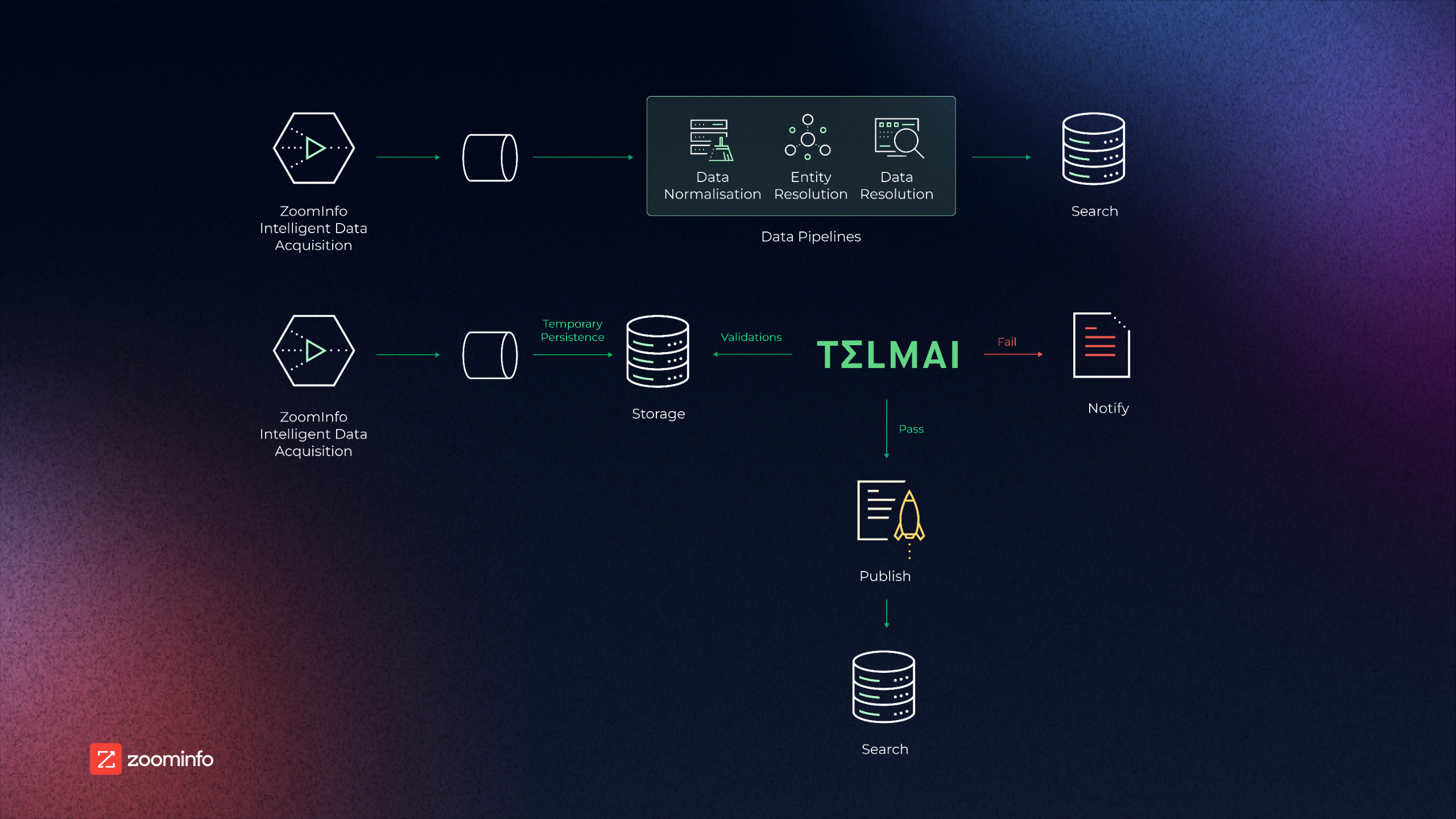
At ZoomInfo, this shift has been architectural. Rather than automatically pushing updates from the source of truth to their customer-facing search platform, the data team now holds that data until it passes a battery of automated quality checks powered by Telmai. If anomalies are detected, a failure alert is sent via Slack, and the data is held back from publication until the issue is resolved.

“We prevent the bad data from being exposed to the customer,” explained Hasmik Sarkezians, SVP of Data Engineering at ZoomInfo, “we catch that before it’s even published.” Updated records now undergo anomaly detection and policy checks via DAGs, and only data that passes validation is published. If an issue is found, a failure alert is pushed into Slack, and the data is held for manual review or correction.

In one instance, a faulty proxy once caused a data source to generate null revenue values for a large portion of companies. “We already caught multiple issues,” said Hasmik, referencing one such case involving SEC data, “proxy had an issue [that] generated null values, and we didn’t consume it because we had this alert in place.”

The pipeline, equipped with Telmai rules and micro-batch DAGs, caught the anomaly before it could propagate to customers.

Meanwhile, at Bill, the platform team faced a familiar challenge: lean data engineering resources spread thin managing Great Expectations and ad hoc rule logic. With a growing number of internal and external data consumers—including AI agents, forecasting engines, and fraud models—the cost of manual triage became unsustainable.

At Bill, the driver was slightly different. Their lean engineering team had previously relied on open-source frameworks like Great Expectations, but the overhead of managing rule-based tests across dynamic datasets was increasingly unsustainable.

Our hope with Telmai is that we’ll improve operational efficiency for our teams… and scale data quality to analytics users as well, not just engineering. – Aindra Misra, Director of Product at Bill

By introducing anomaly detection, no-code interfaces, and out-of-the-box integrations, Bill aims to empower not just data engineers but business analysts to assess trustworthiness—without relying on custom rules or engineering intervention.

For both companies, this marks a step toward making observability not just visible, but actionable—and enabling faster, safer data product delivery as a result.

The Role of Open Architectures

Both Bill and ZoomInfo emphasized the centrality of open architectures, anchoring their platforms on Apache Iceberg to support scalable, AI-ready analytics across heterogeneous, rapidly evolving ecosystems. 

ZoomInfo, in particular, has leaned into architectural openness to simplify access across its vast and distributed data estate that includes cloud platforms and legacy systems. “We’ve been at GCP, we have presence in AWS. We have data all over,” said Hasmik Sarkezians. To unify this complexity, ZoomInfo adopted Starburst on top of Iceberg. “It kind of democratized how we access the data and made our integration much easier.”

Bill echoed a similar philosophy. “For us, open architecture is a combination of three different components,” explained Aindra Misra. “The first one is… open data format. Second is industry standard protocols. And the third… is modular integration.” He highlighted Bill’s use of Iceberg and adherence to standardized protocols for syncing with external accounting systems—ensuring flexibility both within their stack and across third-party integrations.

This architectural philosophy carries important implications for observability. Rather than relying on closed systems or platform-specific solutions, both teams prioritized composability—selecting tools that integrate natively into their pipelines, query layers, and governance stacks. As Mona pointed out, interoperability was “literally table stakes” in ZoomInfo’s evaluation process: “Would we integrate with their today’s data architecture, future’s data architecture, past data systems?”

Observability, in these environments, must adapt—not disrupt. That means understanding Iceberg metadata natively, connecting easily to orchestration frameworks, and enabling cross-system validation without manual validation. In short, open data architectures demand open observability systems—ones built to meet organizations where their data lives.

This design philosophy lets teams keep pace with changing business and technical needs. In Hasmik’s words: “…for me it’s just democratization of… the quality process, the data itself, the data governance, all of that has to come together to tell a cohesive story.”

By rooting their approaches in open, flexible architectures, both companies have positioned themselves to scale trust and agility—making meaningful, system-wide observability possible as they pursue ever more advanced data and AI outcomes.

Organizational Lessons: Who Owns Data Quality?

Despite making significant technical strides, both panelists acknowledged that data quality ownership and building a culture around it remain a persistent challenge.

ZoomInfo tackled this by forming a dedicated Data Reliability Engineering (DRE) team was initially created to manage observability infrastructure and to onboard new data sets. However, as Hasmik Sarkezians explained, this model soon ran up against bottlenecks and scalability concerns:

“Currently, we have a very small team. We created a team around [Telmai], which is called the DRE, the data reliability engineers… It’s a semi-automatic way of onboarding new datasets… but it’s not really automatic and it’s not really easy to get the direct cause, so there’s a lot of efforts being done to automate all of that process.”

Recognizing these limitations, ZoomInfo is actively working to decentralize data quality responsibilities. The vision is to empower product and domain teams—not only centralized data reliability engineers—to set their own Telmai policies, receive alerts directly, and react quickly via Slack integrations or future natural language interfaces:

“For me, I think we need to make sure that the owner, the data set owner, can set up the Telmai alerts, would be reactive to those alerts, and will take action.”

At Bill, Aindra Misra described a similar challenge. Leaning too heavily on a small, expert engineering team created not just operational drag, but also strained handoffs and trust with analytics and business teams: “With the lean team… things get escalated and the overall trust between the handshake between internal teams like the platform engineering and analytics team—that trust loses.”

Their north star is to build an ecosystem where business analysts, Ops, GTM teams, and other data consumers have the direct context to check, understand, and act on data quality issues—without always waiting for engineering intervention.

In both organizations, it’s clear that tools alone aren’t enough. Ownership must be embedded into culture, process, and structure—with clearly defined SLAs, better cross-team handoffs, and systems that empower the people closest to the data to take accountability for its quality.

Toward AI-Ready Data Products

Both organizations are also preparing for a shift from analytics-driven to autonomous systems.

At Bill, internal applications are increasingly powered by insights and forecasts that must be accurate, explainable, and timely. Use cases like spend policy enforcement, invoice financing, and fraud detection rely on real-time decisions driven by data flowing through modern platforms like Iceberg. As Aindra Misra noted, delivering trust in this context is critical: Trust is our mission—whether it’s external customers or internal teams, data SLAs need to be predictable and transparent.

ZoomInfo, meanwhile, is layering AI copilots and signal-driven workflows on top of an extensive enrichment pipeline. As Hasmik Sarkezians explained earlier, a single issue in a base data set can cascade through derived fields—corrupting entity resolution, contact mapping, and ultimately customer-facing outputs.

In both environments, the stakes are rising. Poor data quality no longer just breaks dashboards—it can undermine automation, introduce risk, and erode customer trust. As Aindra put it:

Once the data goes into an AI… if the output of that AI application is not what you expect it to be, it’s very hard to trace it back to the exact data issue at the source… unless you observed it before it broke something.”

That’s why both organizations see observability not as a reporting tool, but as a foundational enabler of AI—instrumenting every stage of the pipeline to catch issues before they scale into system-wide consequences.

Final Thoughts: Trust Is Your Data Moat

As AI models and agentic workflows become commoditized, the true differentiator isn’t your algorithm. It’s the reliability of the proprietary data you feed into it.

For both Bill and ZoomInfo, embedding observability wasn’t just about operational hygiene. It was a strategic move to scale trust, protect business outcomes, and prepare their architectures for the demands of autonomous systems.

Here are a few key points and takeaways from this panel discussion –

  • Start Early. Shift Left: Observability works best when embedded at the data ingestion and pipeline layer, not added post-facto once problems reach dashboards or AI models.
  • Automate the Feedback Loop: Use tools that not only detect issues but can orchestrate action—blocking bad data, triggering alerts, and assigning ownership.
  • Democratize, Don’t Centralize: Give business and analytics teams accessible controls and visibility into data health, instead of relying solely on specialized teams.
  • Build for Change: Choose data observability platforms that support open standards, multi-cloud, and mixed data ecosystems—future-proofing your investments

Want to learn how Telmai can accelerate your AI initiatives with reliable and trusted data? Click here to connect with our team for a personalized demo.

Want to stay ahead on best practices and product insights? Click here to subscribe to our newsletter for expert guidance on building reliable, AI-ready data pipelines.